


The shift in UAE’s sugar tax will create new competitive pressures and opportunities across the FMCG sector – especially for brands navigating sugar levels, reformulation and value perception.
What’s changing in 2026?
The new excise model links tax directly to grams of sugar per 100 ml, replacing the uniform 50% rate previously applied to sweetened drinks.
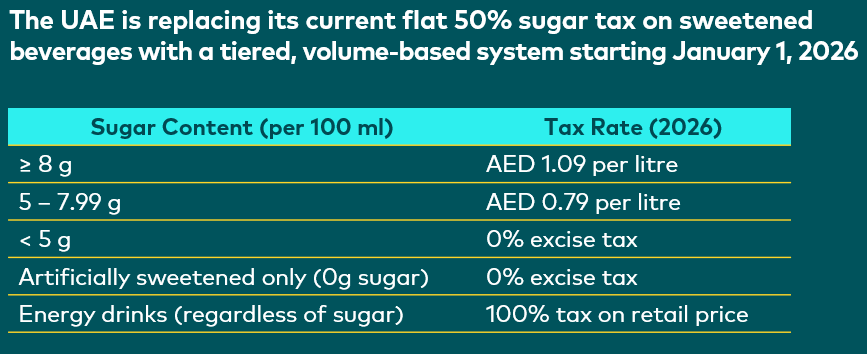
The following categories remain exempt from the new sugar content tiers:
- 100% natural juices, milk and dairy drinks
- Medical nutrition beverages
- Freshly prepared drinks (e.g., made-to-order juices)
This tiered system introduces greater complexity for manufacturers and retailers compared to the blanket approach of 2020.
Key challenges FMCG players must prepare for
1. Reformulation becomes a strategic decision
Brands close to the 8g threshold will face pressure to reformulate, but the implications on flavour, brand equity and timelines will require careful planning – with each move likely impacting consumer perception and competitive positioning.
2. Pricing structures will shift
With tax amounts no longer uniform, price ladders may move in unexpected ways. Some SKUs will rise, others may actually become cheaper, and mid sugar products could regain competitiveness. This will require a reassessment of pricing, promotions and pack roles.
3. Promotions will need recalibration
Promotional strategies that previously softened tax impact – especially in categories like energy drinks – will need adjusting to reflect the new tiered system. Expect negotiations and value mechanics to play a larger role in shopper conversion.
4. Innovation will pivot toward low and mid sugar
Brands will likely accelerate launches of zero-sugar, naturally sweetened or mid tier products that fall into more favourable tax brackets. The mid-range (5–7.99g) in particular may become increasingly crowded.
5. Operational and supply chain demands rise
Transitions to reformulated SKUs, stock clearance, and maintaining consistent on shelf pricing during the switch will require close manufacturer–retailer coordination. Agility will be critical.
6. Retailers will revisit shelf strategy
Lower sugar beverages becoming more price accessible may shift category blocks, facings and visibility investments. Retailers will be managing more complexity but also gain leverage in assortment choices.
What this means for FMCG brands and how Worldpanel by Numerator can help
The 2026 sugar tax nudges the market toward healthier portfolios, sharper price–value architecture, and more innovation in sweetening and formulation.
Brands that act early – reformulating smartly, managing price transitions well, and communicating health benefits without compromising taste – will be best positioned to grow.
Worldpanel by Numerator experts will give you more details on how this new tax could affect your categories and help you plan your strategy to get ahead of the competition.
Watch our recent webinar Who Cares? Who Does? on Health for additional insights.
Get in touch now and get a full presentation with more insights.
Priyanshu Rana
Thought Leadership AME
Worldpanel by Numerator



.svg)