


Kenyan consumers are not spending less; they are spending smarter. As financial pressure reshapes decision making, FMCG growth is no longer driven by impulse or scale, but by relevance earned trip by trip.
Two behavioural shifts now stand out as the clearest signals of how consumption is evolving in 2026: value led frequency and disciplined control. Together, they explain why traditional growth levers are becoming less effective – and why brands must rethink how they show up in everyday shopping moments.
Truth #1: Growth comes from more trips, not bigger baskets
>>Rule: VALUE – Win frequency, not basket expansion
Kenyan consumers are shopping more often, but with caution. FMCG growth is increasingly driven by higher trip frequency rather than increases in spend or units per visit. Shoppers are justifying every choice, prioritising value and purpose over impulse.
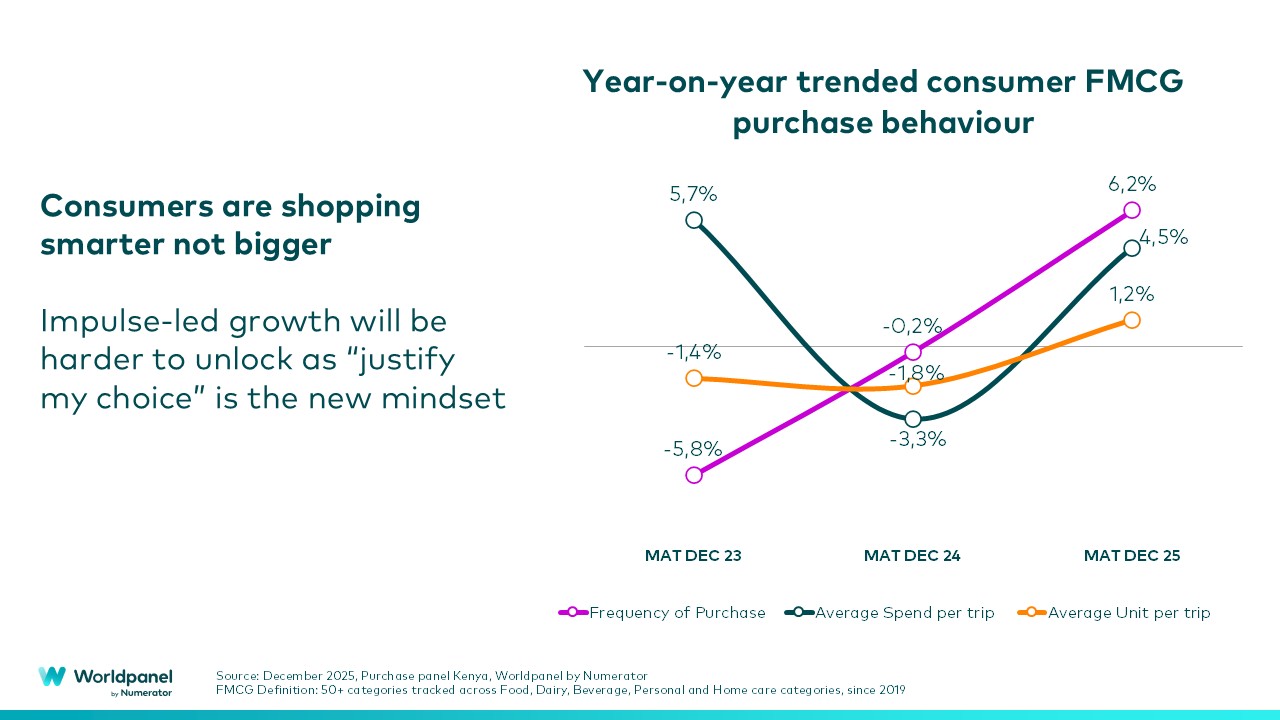
Data shows that frequency has become the dominant contributor to growth across FMCG, while spend and units per trip remain flat or constrained. This dynamic is consistent across major categories and is particularly pronounced in urban and coastal regions, where shoppers are spreading purchases across more frequent, smaller missions. Younger shoppers are also driving this shift, showing significantly stronger growth in purchase frequency than older cohorts.
For brands, this changes the growth challenge. Winning no longer comes from pushing bigger baskets, but from earning repeat choice at shelf. Being chosen more often matters more than being bought in larger quantities.
Truth #2: Consumers are experimenting – with control
>>Rule: CONTROL – Design for discipline, not peaks
Spend is no longer reactive or driven by seasonality alone. Kenyan households are actively regulating consumption across the year, experimenting more across brands while staying firmly in control of budgets.
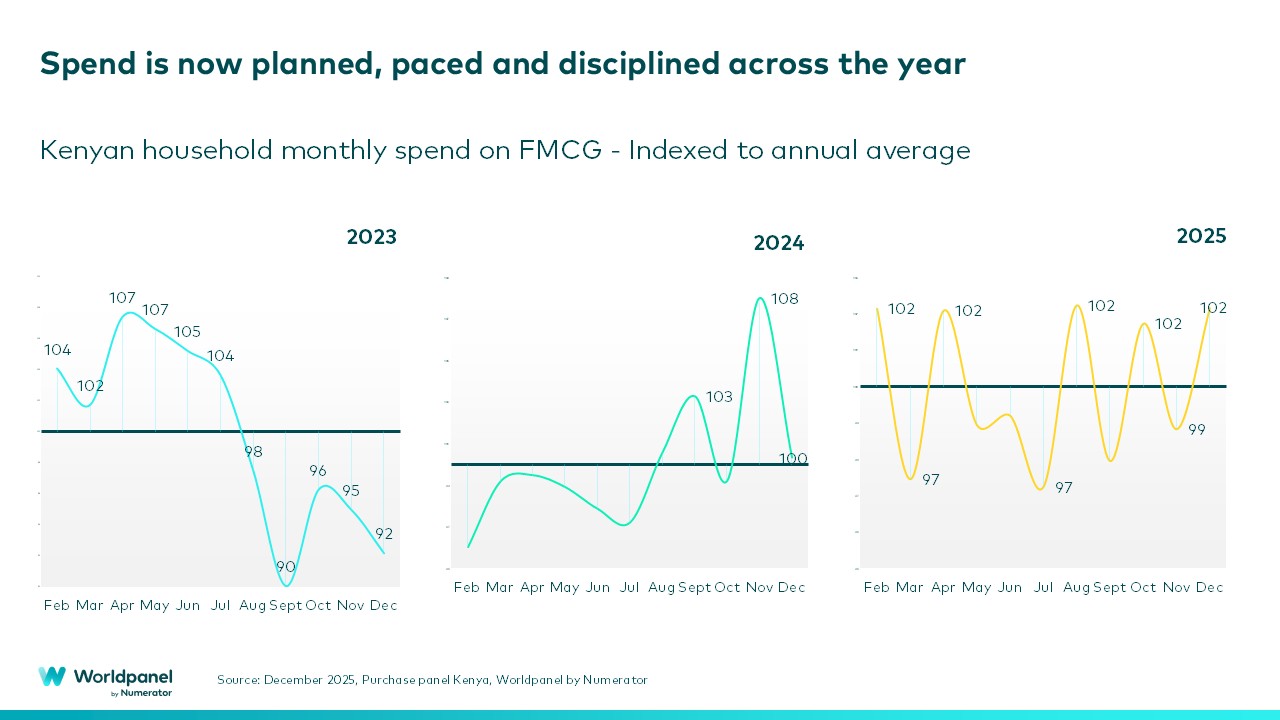
This disciplined behaviour means promotions alone are no longer enough to drive sustainable growth. Instead, brands must design portfolios for all year relevance – defending entry price points, justifying premium tiers, and building habitual usage. The shift away from seasonal spikes towards steadier, regulated spending patterns reinforces the need to move beyond planning for moments and start planning for behaviour.
Brands that win will be those that fit into planned, paced shopping routines rather than relying on short term volume bursts. Together, these two truths mark a decisive shift. Growth in Kenya is no longer about driving bigger missions or chasing isolated peaks, but about earning relevance across frequent, carefully planned trips.
In the next phase, the question is no longer whether consumers are disciplined, but how brands can win in a world where control, not impulse, defines success.
Watch this space for part two of this article, where we explore the third truth emerging as a key engine of FMCG growth in Kenya, and the common traits shared by the fastest growing brands.
If you would like to explore these insights sooner, or understand how these shifts translate into brand and category specific growth opportunities, contact our experts.
Osato Igbinadolor
Country Manager, East Africa
Worldpanel by Numerator


.svg)