


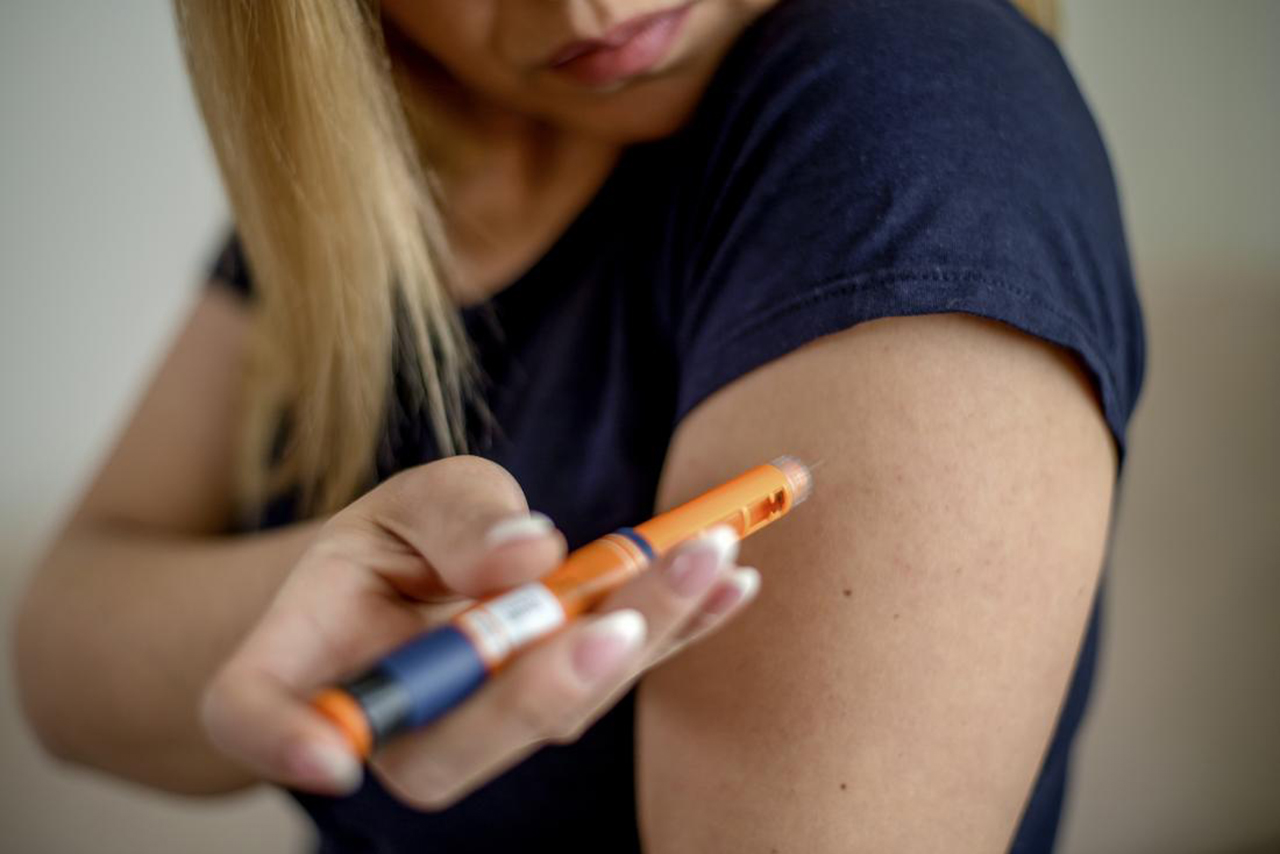
As GLP-1 adoption accelerates across the Middle East, our new research suggests the impact of these medications extends far beyond weight management.
With Saudi Arabia as a key indicator market, the study reveals that consumers using GLP-1 medications –or considering them– are not simply changing what they eat; they are reshaping how they think about their overall health, from monitoring daily wellbeing to making more intentional lifestyle choices. Even if one member in the family adopts this regime, it quite likely influences the buying and consumption behavior of the whole family.
How GLP-1 is influencing consumer spending
From a consumer goods perspective, this audience is becoming increasingly important. Currently, at least one member in approximately 9% of Saudi households (around 700,000 families) is a GLP-1 user, and these households account for approximately SAR 7.3 billion (€1.7 billion) in FMCG spending.
A further 14% of households include at least one member considering GLP-1 treatment, representing approximately SAR 8.2 billion (€1.9 billion) in FMCG spending.
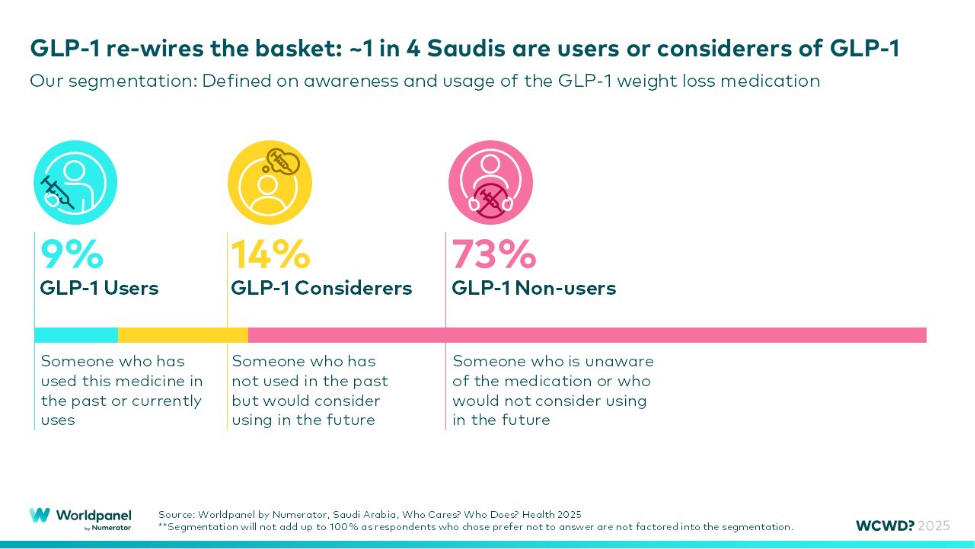
Saudi Arabia offers an early view into the emerging GLP-1 consumer across the region
Saudi Arabia’s adoption rate is already among the highest measured by Worldpanel by Numerator globally. By comparison, at least one member in 6.3% of households in Great Britain is a GLP-1 user currently, while in Brazil the figure stands at 2.4%. The findings highlight Saudi’s role as a leading market in the global expansion of GLP-1 medications and their growing influence on consumer behaviour.
The research further suggests that brands and retailers may need to rethink how they engage with these consumers. Rather than focusing solely on calorie reduction or weight management, opportunities may increasingly lie in products that support nutrition, ingredient transparency, and holistic wellbeing.
Karan Gupta, Advanced Analytics and Solutions Director Africa and Middle East, at Worldpanel by Numerator, said: “As GLP-1 adoption expands across the Middle East, the Saudi market illustrates how these treatments may influence future consumer behaviour – creating a new generation of shoppers who are not only managing their weight, but actively investing in their overall health and are conscious of their buying and consumption behaviour.”
The study found that current GLP-1 users are:
- 32% more likely than average shoppers to actively monitor their health
- 31% more likely to follow a balanced diet
- More likely to review ingredients and nutritional information before purchase
Meanwhile, Saudi consumers considering GLP-1 medications are also demonstrating healthier lifestyle habits. Compared with average shoppers, they are:
- 29% more likely to limit screen time
- 21% more likely to exercise regularly
- More likely to avoid artificial sweeteners and unhealthy habits
The findings point to the emergence of a distinct consumer segment whose behaviours are increasingly shaped by broader health and wellness goals.
“The rise of GLP-1 is creating a new consumer segment that deserves attention beyond the healthcare industry,” said Gupta. “These consumers are demonstrating stronger engagement with nutrition, lifestyle and preventive health, making them an increasingly influential audience for FMCG brands, retailers and the wider wellness ecosystem. As adoption grows, understanding how their needs and expectations evolve will be critical for brands looking to stay relevant in a changing consumer landscape.”
The findings come at a time when obesity, diabetes and metabolic health remain major priorities across Middle Eastern healthcare systems. As consumers become increasingly focused on prevention and long-term wellbeing, demand for products and services that support healthier lifestyles continues to grow.
If you would like to access the full report or schedule a free consultation with our local experts, do not hesitate to reach out.
Karan Gupta
Advanced Analytics & Solutions Director
Africa & Middle East
Worldpanel by Numerator



.svg)