


Advantage is protected when innovation strengthens routine stability. That means protecting recruitment, repeat, and value. In essence avoiding the kind of disruption that makes a second purchase feel conditional.
Ironically, this is the phase where many teams feel they are still “doing the right things”.
Internal spreadsheets show the innovation calendar is full, distribution is steady, and promotions are landing. Yet routine stability has started to wobble. The early warning signs do not always show up as a dramatic sales drop. Instead, we see them show up as fragility, where penetration churn increases, repeat purchase becomes conditional, and where the brand’s place in the day starts to look easier to replace.
Protection begins with a hard truth
Innovation is widely assumed to add value. It can even be considered as a fast-track path to margin improvement through things like new flavour variants that require relatively little effort to produce. In reality, value can be under threat even while the new product is continuing to sell well.
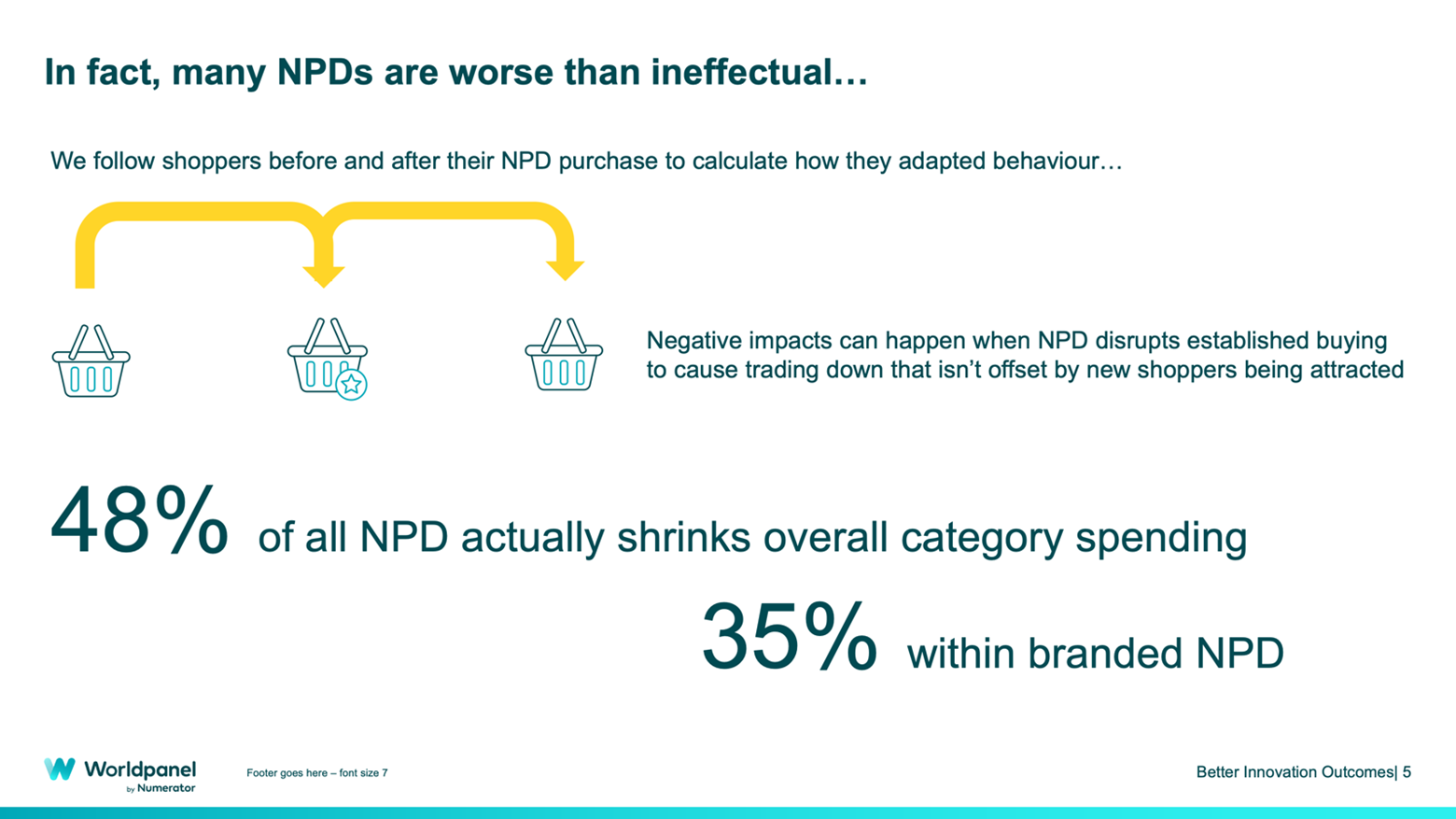
When shopper behaviour is tracked before and after a new product purchase, the evidence shows that 48% of launches reduce overall category spending rather than expanding it. More than a third of that negative effect, 35%, comes from branded innovation itself. The mechanism is familiar: some launches disrupt established buying patterns, encourage trade-down, and fail to recruit enough new demand to offset what they displace. (These numbers are based on a Worldpanel analysis of 400 launches over three years.)
This is where protection becomes a commercial question, not an academic one. The issue is not whether a product sells in its first months. It is whether it strengthens the category’s ability to hold value, and whether the brand earns a role that can endure when launch support fades.
Price discipline protects routine
Deep discounting can create volume quickly. But it also trains behaviour quickly and mechanistically increases the probability that the pack price being paid falls below the established norm for any given shopper. T his has always been the jeopardy in play.
So how should it be managed? The evidence-led guidance is consistent across the launch patterns: high-performing innovation tends to build visibility through promotion while avoiding discount depth that exceeds category norms, because overly generous discounts increase trade-down risk and make repeat less stable. Value is protected when promotions work as a discovery mechanic, and when shoppers still recognise the product as worth paying for once the deal ends.
This matters most in categories where routines are already under pressure. When shoppers are simplifying, or when substitute behaviours are rising, price becomes a lever that can either reinforce confidence or accelerate erosion.
Experience protects repeat
If price discipline protects what people expect to pay, experience protects what they feel they got.
Looking more closely at experience, PanelVoice, Worldpanel’s verified purchase survey offer, shows that the biggest behavioural risk is not indifference; it is detractors. The best-penetration launches index 114 for being noticed in store, while the lowest-penetration cases index 74. On “good/very good” experience the differences are narrower, at 106 versus 94. The sharpest separation is recommendation: 87 for the strongest launches, 55 for the weakest.
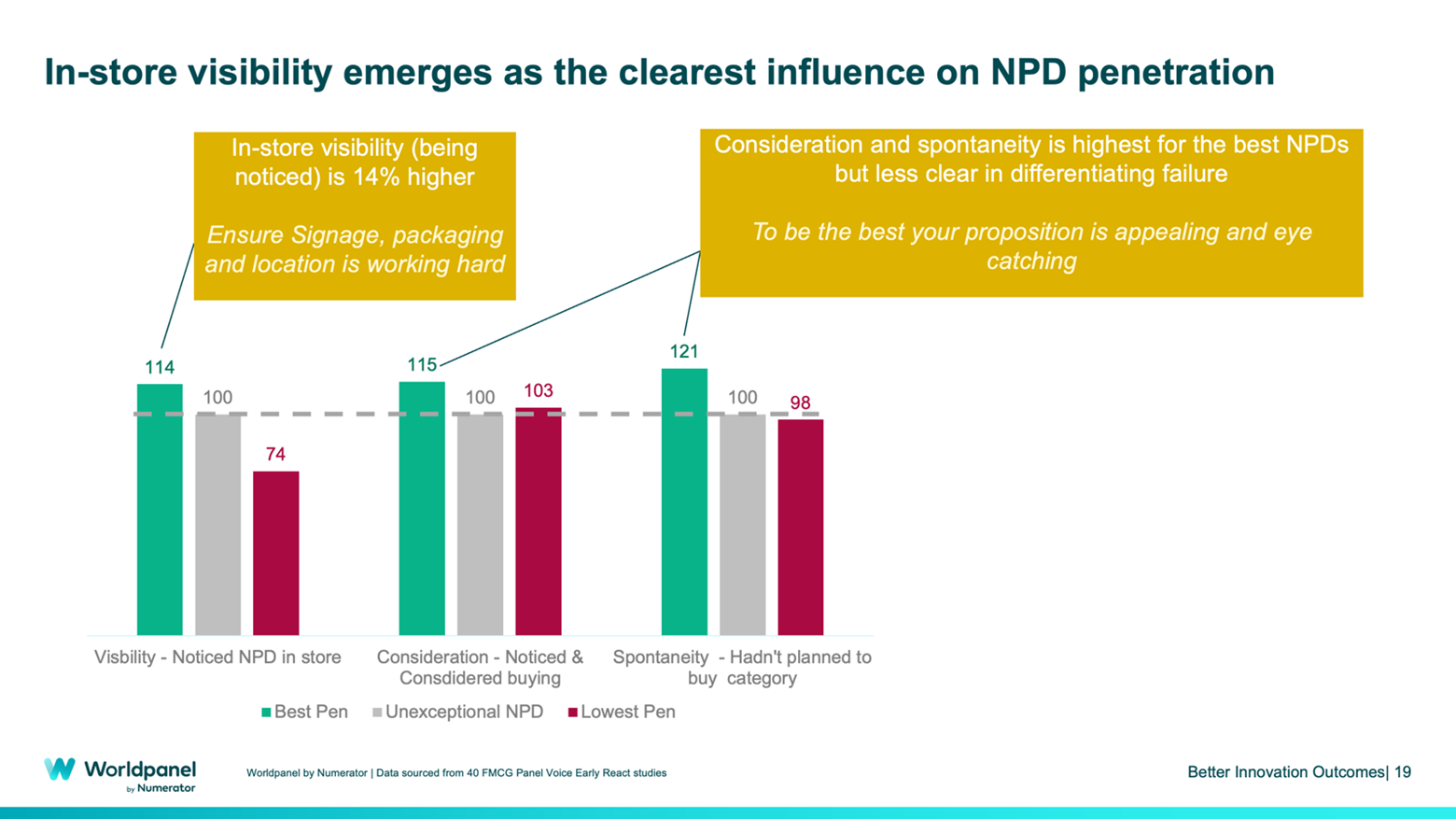
So, if experience is so central to product success, the risk lies in the recommendation gap, where routine can break first. People do not need to love every product to buy it again, but they do need to trust it. A disappointing first experience, or a proposition that feels over-promised, turns repeat into hesitation; hesitation is where substitution starts to creep in.
Protection, in other words, is partly about removing avoidable reasons to stop buying.
Routine substitution is the real competitive threat
Drinks shows how routine substitution can grow in plain sight. Tea, a category built on habit, has lost around 800m occasions year on year, leaving roughly a £40m gap in everyday value. At its core, the most engaged group of tea drinkers is shrinking and recruitment isn’t overcoming trends such as an expanded coffee culture with more offerings. Tap water also now accounts for 18% of drink serves, up from 16% a few years earlier, removing around £90m from soft drinks.
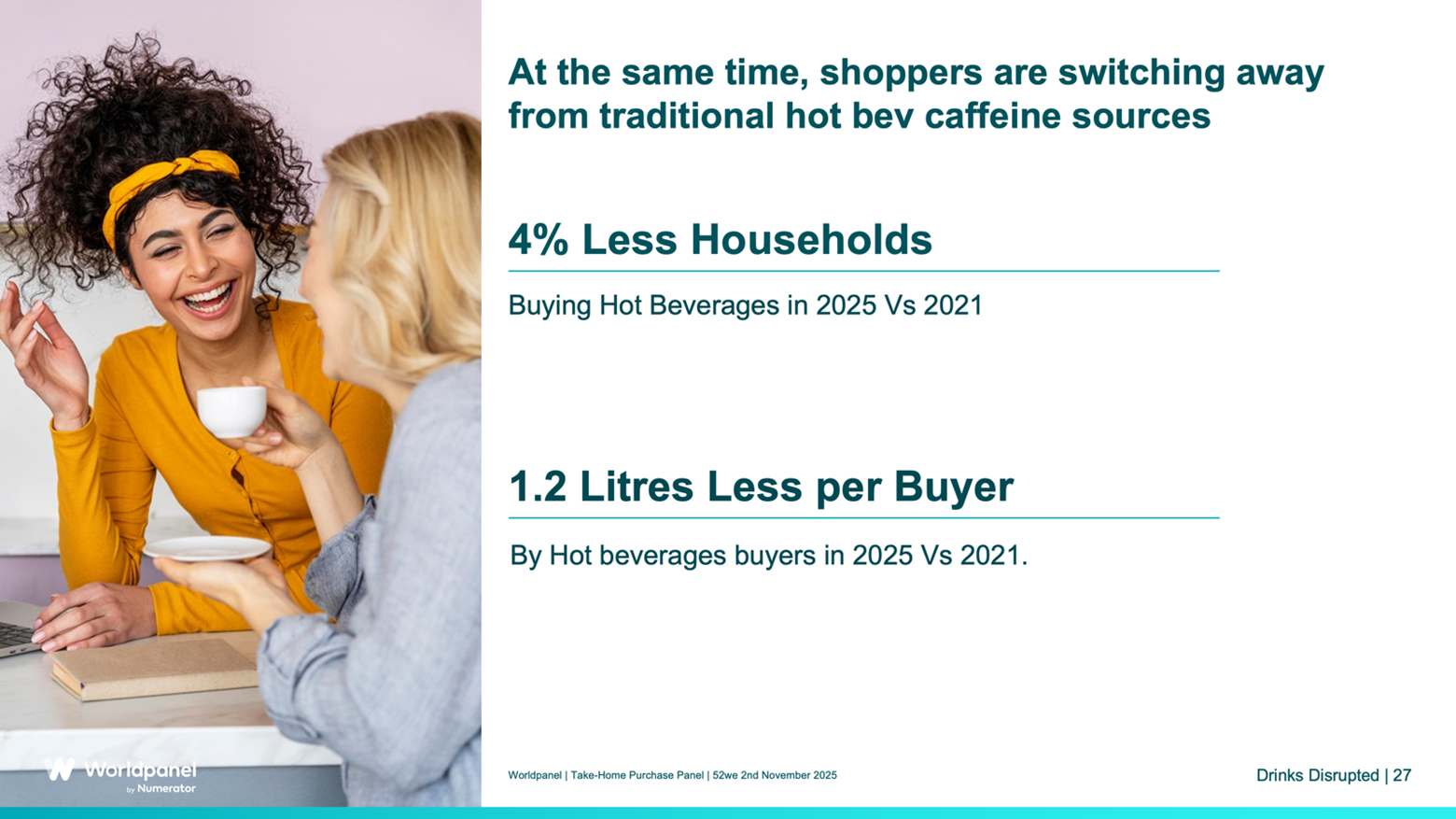
Those are not small movements. They are changes in daily behaviour, the kind that become self-reinforcing once they settle. The risk for brands is clear: if the routine disappears, the brand does not get the chance to compete.
Alcohol moderation sits inside the same story. About 23m adults in Great Britain say they are actively trying to moderate alcohol consumption, up by 1.2m in the past year. The result is fewer occasions where alcohol is the default, more occasions where alternatives are acceptable, and more overlap between categories as people build new routines around earlier moments and “anytime” needs.
It’s important to recognise that protection should be about designing innovation that fits such changing demand, so the brand remains present in the routines that are replacing the old ones. Resisting the change is unlikely to end well.
Prioritising the priorities
Advantage is also protected when innovation strengthens routine stability under pressure. The evidence points to a practical set of priorities.
First, treat category value as a north star. Launch sales do not guarantee category expansion, and in many cases the category outcome moves in the wrong direction. Knowing which pattern you are in, early, changes investment decisions.
Second, protect price integrity. Promotions that improve discovery can help. Discount depth that resets expectations makes repeat fragile, and fragility is expensive causing purchasing to take place at a value below the “norm” for that shopper.
Third, design for confidence after trial and hold the bar high. Visibility earns the first purchase. Experience determines the second. Detractors are a leading indicator of routine breakage, and they appear early enough to act on.
Finally, watch substitution. When consumers change their routines, they don’t announce it; they simply keep repeating the new choice until it becomes the default. That is where advantage is either protected or surrendered.



.svg)