


(1).jpg)
For brands investing heavily in sports marketing, a key question remains: How can they objectively assess the commercial value of this mega sporting property and align it with broader brand growth strategies?
By connecting consumer viewing-intent survey data with omni-channel purchase behavior from the single-source consumers, Worldpanel by Numerator provides a comprehensive view of the business opportunities behind the 2026 World Cup. Through audience profiling, cross-channel viewing touchpoints, and brand purchase indices, it offers an evidence-based perspective on how brands can maximize the value of this global event.
I. High-Value World Cup Audiences: A Once-Every-Four-Years Big-Screen Entertainment Occasion
Audience Profile: Affluent, Mature Households Form the Core Audience
The World Cup enjoys broad appeal among Chinese consumers, particularly among men aged 34–44 in upper tier cities. According to the latest survey of Worldpanel by Numerator, more than one-third of urban consumers in China have expressed a clear intention to watch the 2026 World Cup. Men continue to dominate the audience base (Audience Index: 131), while consumers aged 35–44 show the strongest viewing interest (Index: 110), especially those living in upper tier cities (Index: 113).
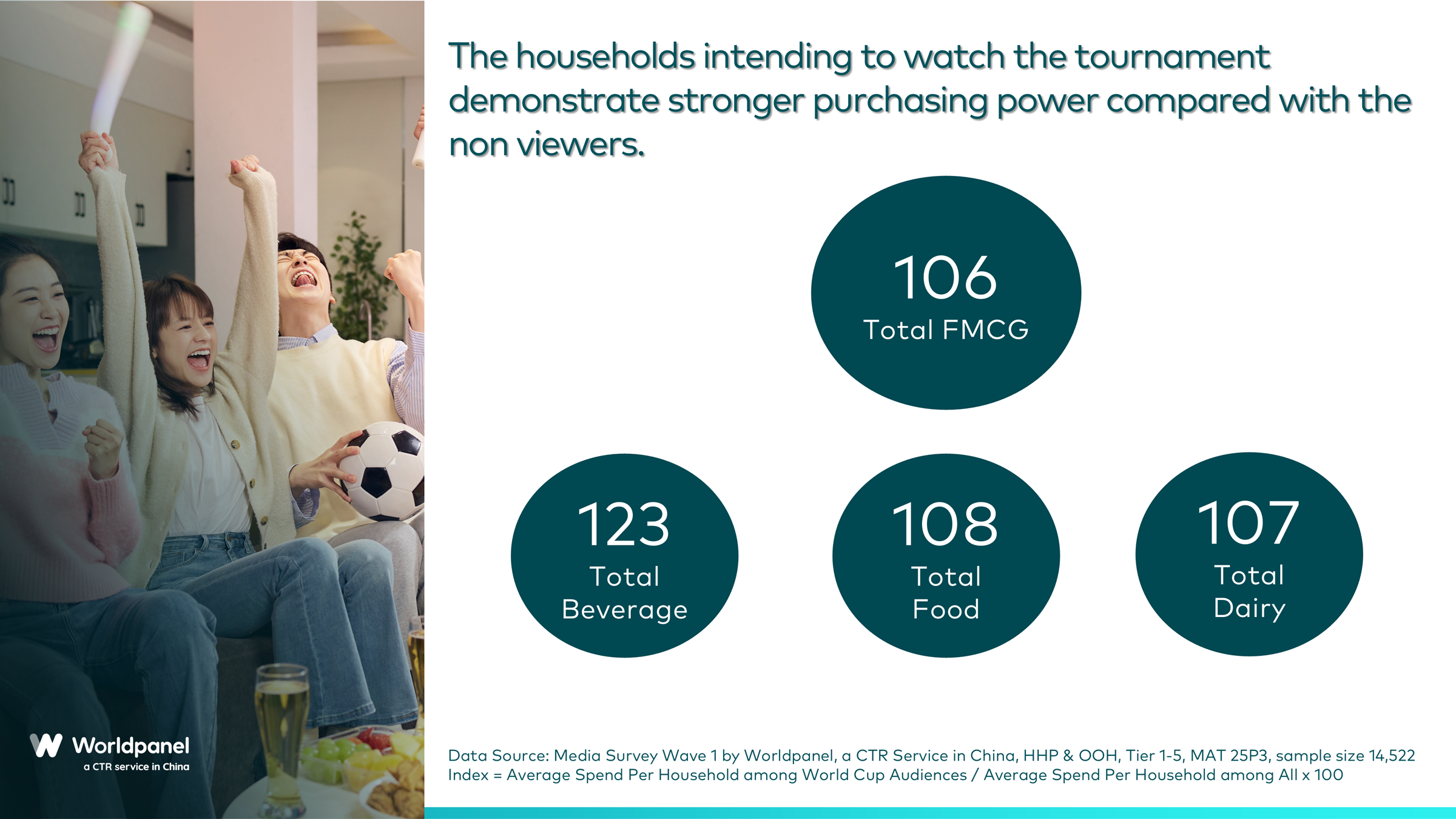
A deeper analysis of these viewers’ omni-channel shopping baskets reveals that World Cup audiences represent a highly valuable consumer segment. Worldpanel by Numerator reports that households intending to watch the tournament demonstrate stronger purchasing power, with higher annual spending across multiple categories compared with non-viewing households. This high-value audience is precisely why many FMCG brands leverage this once-every-four-years event to strengthen brand equity and influence future purchase decisions.
Viewing Motivations: Entertainment and Event Habit Matter More Than “Fan Economy”
As the tournament approaches, many brands are aggressively partnering with star players and national teams. From Bushuila by Dongpeng, a sports drink, endorsed by Kylian Mbappé to Wanglaoji's World Cup campaigns featuring Erling Haaland, to Alienergy collaborations with football legend Ronaldo. The celebrity-driven marketing remains a popular strategy. But is signing world-famous athletes the only path to success?
The latest survey by Worldpanel by Numeratoratest suggests otherwise. The primary reasons consumers watch the World Cup are “relaxation and entertainment” and “a habit of following major international sporting events.” Supporting a specific team or player is often secondary. Viewing occasions also tend to be highly home-centric due to the time difference on airing this year. Consumers are most likely to watch games either alone at home or together with family and friends.
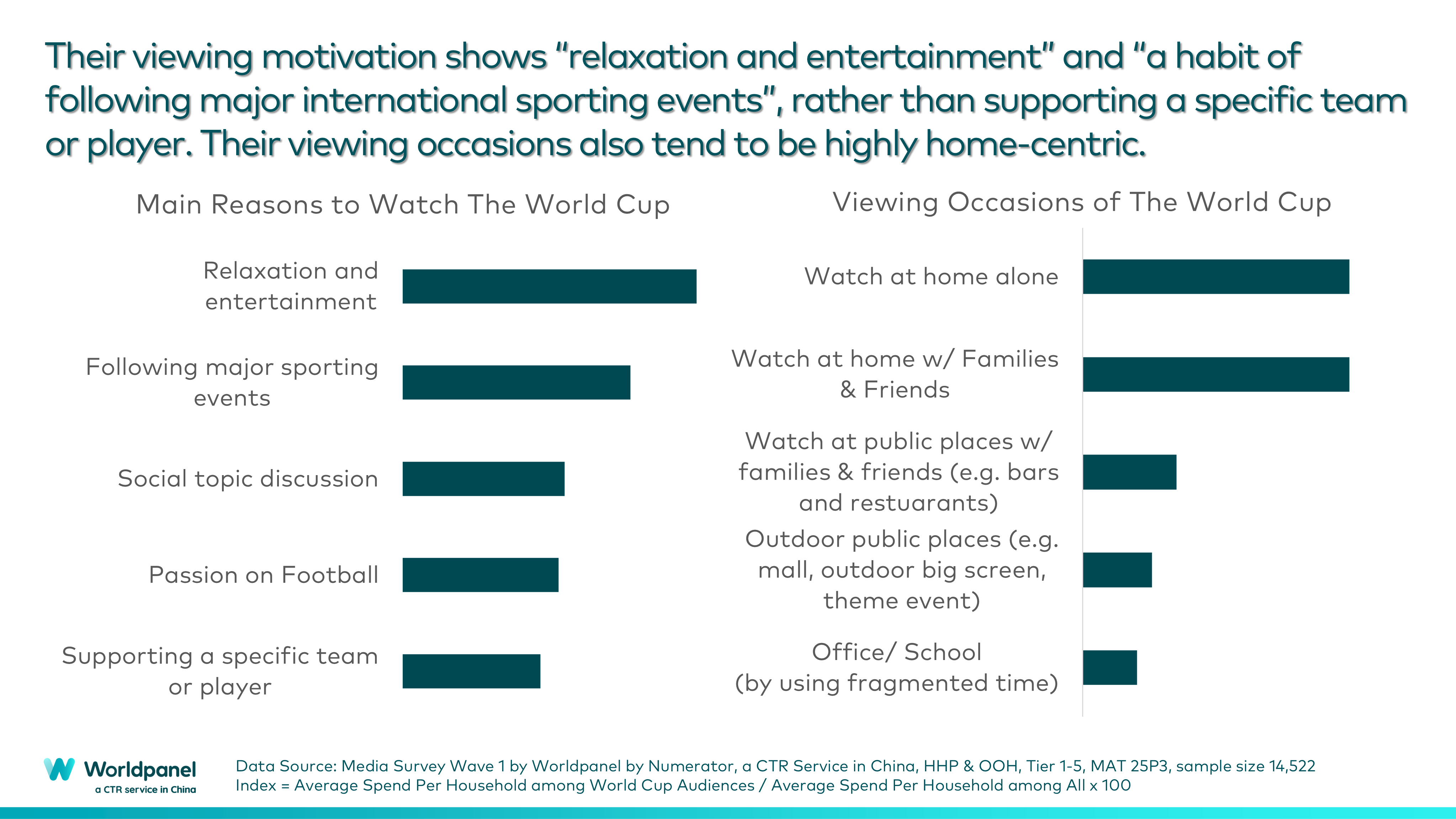
For brands without access to high-profile athlete endorsements, there is still a significant opportunity. By integrating World Cup marketing into family entertainment occasions and everyday viewing moments, brands can become a natural part of the consumer experience and emotional connection surrounding the tournament.
II. Sports Sponsorship: A Powerful Tool for Building Contextual Relevance and Consumer Preference
Brand Value: Creating Long-Term Consumer Influence
When you think of World Cup sponsors, which brands come to mind first?
Coca-Cola has been present at the World Cup since 1950, accompanying generations of football fans around the world. Budweiser has maintained its presence as an official beer sponsor since 1986. The value of a premier sports property extends far beyond visibility. Through memorable victories, iconic moments, and shared celebrations, brands can associate themselves with positive emotions and secure a lasting place in consumers’ minds.
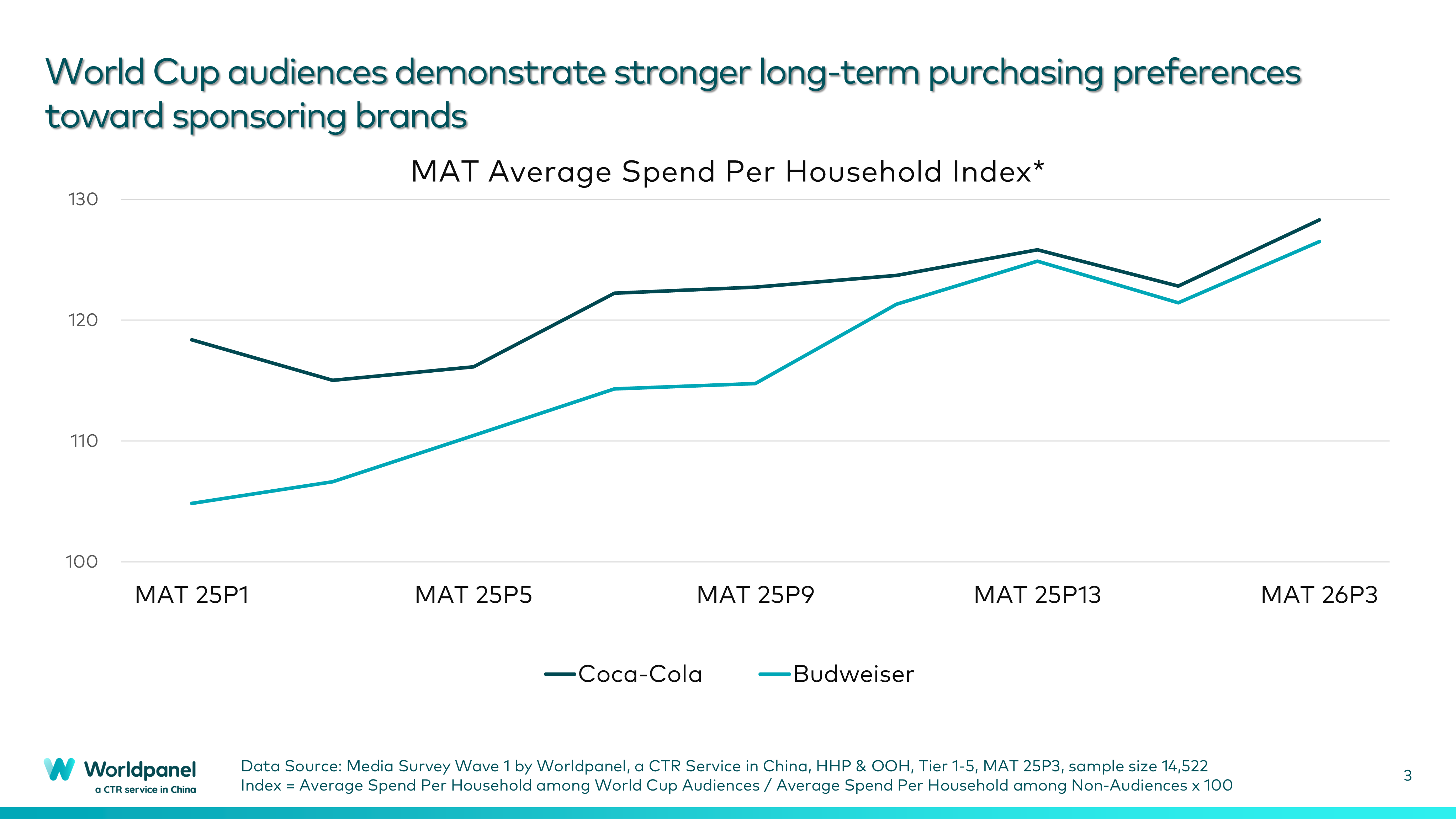
World Cup audiences also demonstrate stronger long-term purchasing preferences toward sponsoring brands. Worldpanel by Numerator continuously tracks the purchasing behavior of World Cup viewers and finds that household spending indices for Coca-Cola and Budweiser among this audience have consistently matched or exceeded those of non-viewers over a two-year period. For brands, sponsorship is therefore not simply about generating awareness. Its true value lies in continuously engaging high-value consumers with strong spending potential and cultivating long-term relationships.
Activation Opportunities: Connecting with Consumers Around Live Broadcasts
Not all advertising touchpoints are equally effective in driving brand recall. According to the latest survey of Worldpanel by Numerator, the most memorable advertising formats are those closely tied to live television broadcasts, including pre-match commercials, halftime advertising, and in-game broadcast placements. Stadium advertising boards and LED screen placements also perform exceptionally well.
Sponsorship Formats Most Likely to Be Remembered During World Cup Viewing
(Ranked from most to least effective)
1. Commercials aired before matches and during halftime breaks
2. Stadium advertising boards and LED screen placements
3. Player endorsements and customized advertising campaigns
4. Livestream sponsorships and on-screen branded pop-ups
5. Tournament-themed products (e.g., limited-edition World Cup beverages or appliances)
6. Social media engagement campaigns
7. Sponsorship of offline viewing events
Brands should look beyond short-term sales. The value of a top-tier sports property extends far beyond short-term sales conversion. It provides an opportunity to build emotional connections with consumers, identify high-value and high-potential audience segments, and cultivate relationships that translate into long-term consumer assets.
How engaged are your category and brand consumers with the World Cup? What motivates them to watch? Do they prefer traditional big-screen viewing or digital and social platforms? Worldpanel by Numerator continues to monitor both audience behavior and purchasing patterns throughout the World Cup journey. We can further quantify the impact of tournament-related investments on brand equity, consumer engagement, and sales impact. Sports marketing remains a key focus for us. By integrating media consumption behavior with omni-channel purchase data, we help brands make more informed, data-driven decisions and evaluate marketing effectiveness with greater confidence.
Contact us to learn about our audience research.
Worldpanel by Numerator is not affiliated with, sponsored by, or endorsed by FIFA.
.jpg)


.svg)